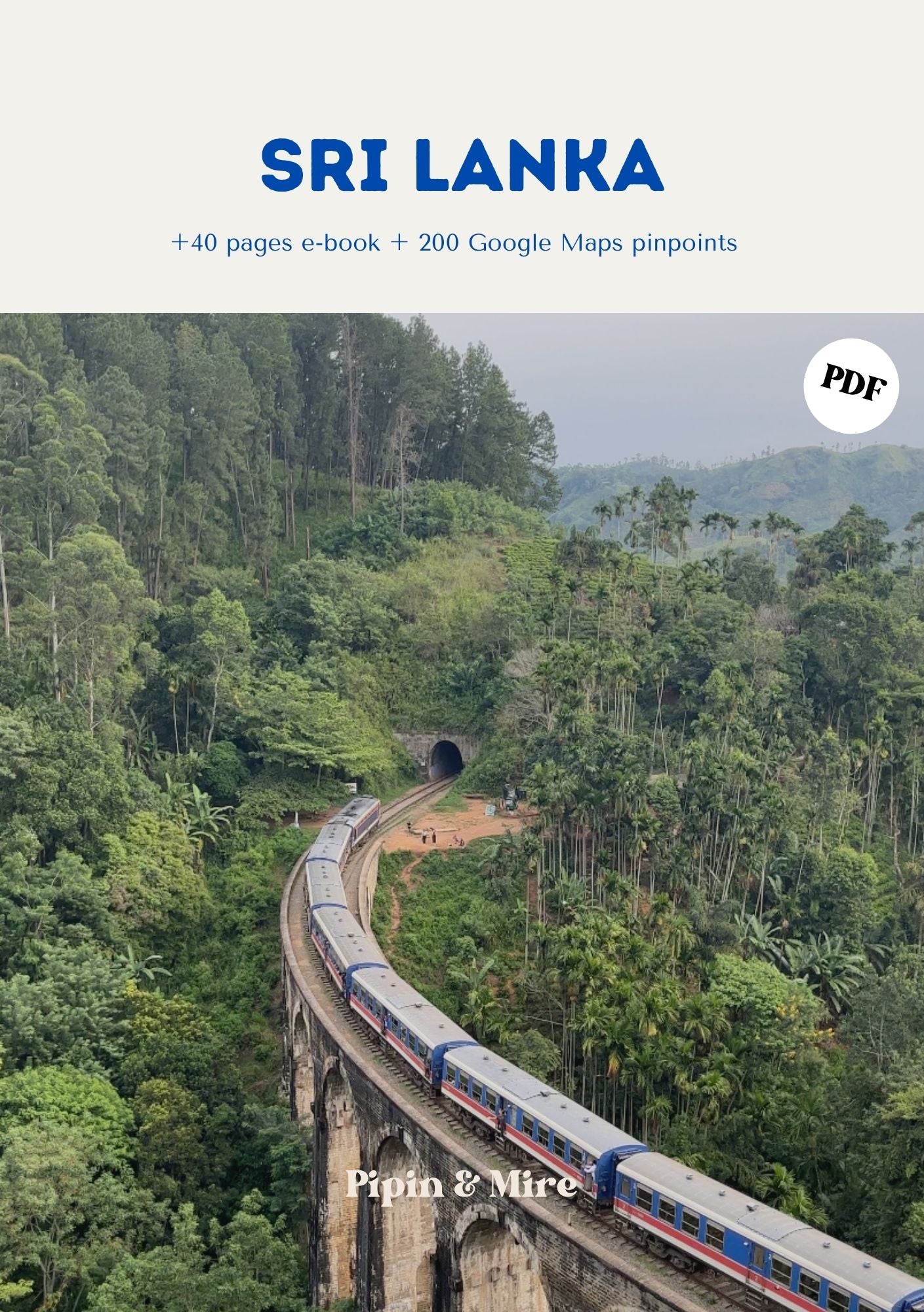
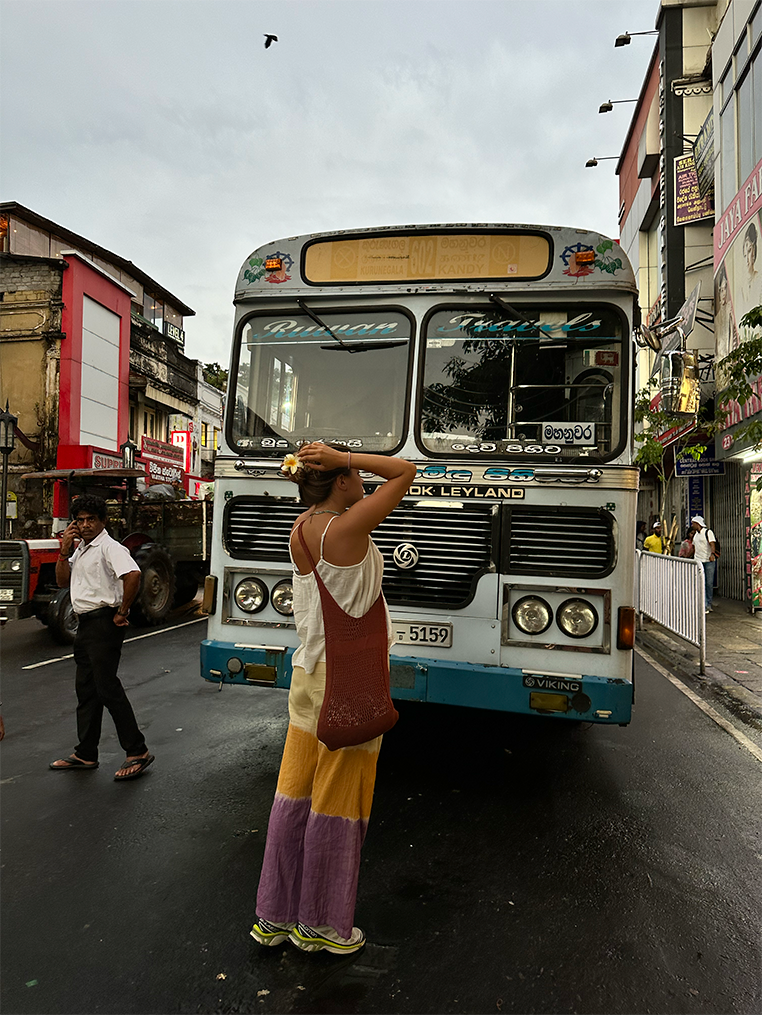

Sri Lanka, the pearl of the Indian Ocean, packs more than 3,000 years of history, Buddhist and Hindu temples, mountains covered in tea plantations, national parks and a south coast made for surfing into a relatively small island. In this guide we sum up the essentials for planning an independent trip in 2026: paperwork, when to go, what to see by region, a 10-day itinerary, where to eat and where to stay.
It all comes from our Sri Lanka PDF travel guide, updated in October 2026, where every section goes into much more detail and every spot is pinned on Google Maps.
Sri Lanka at a glance
- Population: about 22 million people.
- Languages: Sinhala and Tamil are the official languages; English is widely used, especially in tourist areas.
- Currency: Sri Lankan rupee (LKR).
- Time: UTC+5:30, which is 3.5 hours ahead of mainland Spain in summer and 4.5 hours ahead in winter.
- Religion: mostly Buddhist, with Hindu, Muslim and Christian communities too.
Before you go: visa, insurance and vaccines
- Visa: you need an ETA, which you apply for online on the official website eta.gov.lk. Since May 25, 2026 it's free for Spanish citizens and allows a stay of up to 30 days with double entry. Watch out for unofficial websites that charge you to process it.
- Passport: valid for at least six months, with two blank pages.
- Vaccines: none are mandatory coming from Spain; typhoid and hepatitis A, among others, are recommended.
- Travel insurance: a must. We travel with IATI Seguros.
We go into more detail in 10 things to know before traveling to Sri Lanka.
When to go to Sri Lanka
The island has two monsoons that hit different coasts, so it's best to choose your route based on the month:
- December to March: high season and the dry season in the south, the west and the mountains. It's the best time for the classic route.
- April and May: a transition between seasons, with somewhat unpredictable weather.
- May to September: the southwest monsoon, with lots of rain in Colombo and Galle. It's the season for the east coast: Trincomalee, Pigeon Island and Arugam Bay.
- October and November: another transition period; better with a flexible itinerary.
Getting around Sri Lanka
To book a car or tuk-tuk, PickMe and Uber work well (Grab doesn't operate in the country). For long journeys, a car with a driver is the most comfortable option, and the train is the most beautiful way to cross the highlands.
Just keep in mind that in 2026 the mountain line is still being repaired after Cyclone Ditwah: as of October 2026 the Nanu Oya – Ella – Badulla section is running, but there's no direct train from Kandy to Ella. We explain how to plan around it in Ella: what to see, where to eat and how to get there by train.
What to see in Sri Lanka by region
Central region: Kandy, Nuwara Eliya, Dambulla and Sigiriya
The cultural heart of the country. Kandy is home to the Temple of the Sacred Tooth Relic and the Peradeniya Botanical Garden; nearby are the Dambulla cave temple, a UNESCO World Heritage Site, and Sigiriya rock, which we recommend climbing in the afternoon (last entry is at 4:30 p.m. and it costs about 35 USD). In Nuwara Eliya you can visit tea plantations and see how tea is made. And farther south there's Ella, with its hikes to Little Adam's Peak and Ella Rock.
Northern region: Anuradhapura and Jaffna
We loved the ruins of Anuradhapura and highly recommend them. Farther north, in Jaffna, you'll find the fort, the Hindu temple Nallur Kandaswamy (an important pilgrimage site, so respect its hours and rules) and the Buddhist temple Kadurugoda, with its small stupas. In Mannar you'll find the famous baobab tree.
Eastern region: Trincomalee and Arugam Bay
White-sand beaches like Nilaveli, Fort Frederick and Pigeon Island, a marine national park for snorkeling or diving. Farther south, Arugam Bay is a well-known surf spot, beginners included.
Southern region: Galle, Weligama, Mirissa, Ahangama and Tangalle
The coast of beaches and surf. Galle Fort, the stilt fishermen of Weligama, the whales of Mirissa (November to April), the Dondra Head lighthouse in Matara, Tangalle beach and the coral gardens of Hikkaduwa.
Western region: Colombo and Negombo
Colombo wasn't our favorite area: it's a very noisy city and we wouldn't spend more than a day there, although we found Pettah market to be a great experience. For your first night, Negombo, near the airport, is calmer.
If you want to cut to the chase, we've made a shortlist in What to see in Sri Lanka: 10 must-see places.
10-day Sri Lanka itinerary
Here's a summary of the route we suggest in the guide, already adapted to the current state of the train line:
- Day 1 – Colombo / Negombo: arrival, a stroll through Pettah market or the National Museum and a night in Negombo.
- Day 2 – Kandy: about 3 to 4 hours by road. The Temple of the Sacred Tooth Relic, Peradeniya Botanical Garden and dinner at Balaji Dosai, our favorite for local food.
- Day 3 – Nuwara Eliya: about 2.5 to 3 hours, with a stop at a tea plantation and factory.
- Day 4 – Ella: train from Nanu Oya (about 3 hours, reserve your seat online in advance) and a hike up Little Adam's Peak or Ella Rock.
- Day 5 – Yala: optional safari. If you've already done one, you can skip it: it's very crowded.
- Day 6 – Mirissa: about 3 to 4 hours by car, beach time and whale watching in season.
- Day 7 – Weligama: surfing, the Mulkirigala rock temple and Galle Fort.
- Days 8 to 10 – Ahangama: your last few days, car-free, between the beach, surfing and great food.
If you have two weeks, we explain how to extend it with Sigiriya, Dambulla and the ancient cities in our 15-day Sri Lanka itinerary.
Where to eat in Sri Lanka
Local food is spicy and aromatic: rice and curry, kottu roti, hoppers (appa) and lots of seafood. Some of the places we have in the guide:
- Colombo: Ministry of Crab, Nuga Gama and The Gallery Cafe; for coffee, Kaffi Colombo or Cafe Kumbuk.
- Kandy: Balaji Dosai (delicious local food), Empire Cafe and Helga's Folly.
- Ella: Cafe Chill, The Barn by Starbeans, Matey Hut or AK Ristoro. You'll find them all in our post about Ella.
- Weligama: Weligama Kitchen, Sri Surf Kitchen and Ceylon Sliders.
- Ahangama: Maria Bonita, Hardings Boutique, Big Mighty Deli, LaMana and Follow the White Rabbit.
- Hiriketiya: Mond, Dots Bay House and Duni's Hoppers.
- Mirissa: Shady Lane, Petti Petti and Café Scenic.
Where to stay in Sri Lanka
The most practical approach is to switch bases as you go. Some of our recommendations:
- Negombo (first night): Hotel Silver Sands, Le Petit Hotel or Villa Hundira.
- Kandy: Hanthana House, Madulkelle Tea Eco Lodge or, if you're looking for a hostel, Funk Bunks.
- Nuwara Eliya: The Hill Club.
- Ella: Ella Alpine Resort, 9 Arch Jungle Inn or Arana Eco Lodge & Yoga Center.
- Weligama: surf camps like Jamu Surf Lodge or Ocean Tribe Surf Camp.
- Ahangama: Soul & Surf Sri Lanka, Lapoint Surf Camp or The Kip.
- Hiriketiya: Mond or Mazarine Surf Suites.
What to pack
Try to travel with carry-on only: you'll save money and getting around will be much easier. Don't forget:
- Light, breathable clothes, and long linen pants for the temples.
- A rain jacket and a sweatshirt for the highlands.
- Comfortable sandals and hiking shoes.
- Mosquito repellent, sunscreen and a reusable bottle.
- A power adapter, a portable charger and a waterproof bag for documents and electronics.
Respect and awareness
Do as the locals do, respect their rules and hours, cover your shoulders and knees at temples, and look after monuments and nature as if they were your own. Sri Lanka is getting more and more tourists, and it's up to all of us to keep it in good shape.
Plan your trip with our guide
In our Sri Lanka PDF travel guide you'll find all of this in more depth: a bucket list, practical info, what to see by region, cafés, restaurants and hotels by area, art and culture, the 10-day itinerary and the plans we'd do ourselves. And with the Sri Lanka map on Google Maps you'll have every spot on your phone.