
Sri Lanka is a small country with a huge amount of variety: ancient temples and ruins, tea-covered mountains, national parks and surf beaches. It's easy to travel independently, but there are a few things worth getting clear before you book your flight. These are the 10 you ask us about most, with info updated as of October 2026.
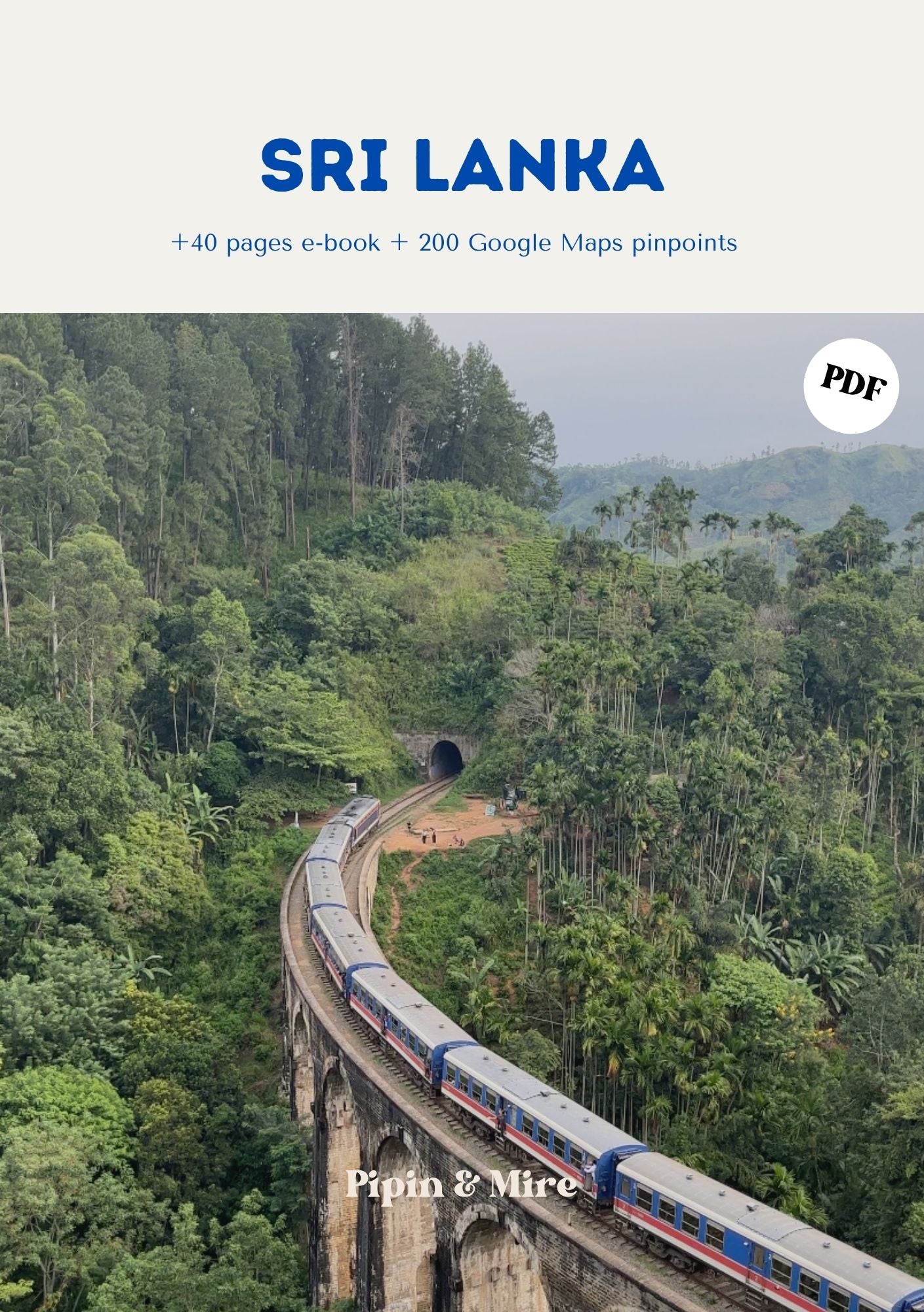
If you want the full itinerary, the places to eat and stay in each area and all the practical info, you'll find it in our Sri Lanka PDF travel guide.
1. Visa: the ETA is now free for Spanish citizens
To enter Sri Lanka as a tourist you need an ETA (Electronic Travel Authorization). You apply online before you fly and it's a simple process.
- Since May 25, 2026, the ETA is free for Spanish citizens (Spain is one of the 40 countries included).
- It allows a stay of up to 30 days, with double entry. If you want to stay longer, you can extend it there by paying the corresponding fee.
- Always apply on the official website, eta.gov.lk. There are unofficial websites that charge you to process it: if it's free for you, you don't have to pay anything.
- On arrival they may ask for your return ticket and proof of sufficient funds.
Check your passport too: it needs at least six months of validity and two blank pages.
2. The best time to go depends on the coast
Sri Lanka has two monsoons, so there's almost always somewhere with good weather. The key is choosing your route based on the month:
- December to March: high season and the dry season on the south and west coasts and in the mountains. It's the best time for the classic route (Kandy, Ella, the south coast).
- April and May: transition months; the weather can be unpredictable in some areas.
- May to September: the southwest monsoon arrives, with lots of rain in Colombo, Galle and the southwest coast. It's time to head east (Trincomalee, Arugam Bay), ideal for snorkeling, diving and surfing.
- October and November: another transition period; keep your itinerary a little flexible.
3. Money: rupees, and always carry some cash
The currency is the Sri Lankan rupee (LKR). The most practical thing is to take out some money from an ATM at the airport when you arrive, so you have cash right away. If you exchange euros, do it at banks or accredited exchange offices.
Hotels and tourist restaurants usually take cards, but for tuk-tuks, food stalls, small entrance fees and less touristy areas you'll need cash. Split your money between two different places and carry small bills.
4. Getting around: train, tuk-tuk, PickMe and a car with driver
- Train: it's the most beautiful way to travel through the highlands, but the mountain line was badly damaged by Cyclone Ditwah in late 2025. As of October 2026 the Nanu Oya – Ella – Badulla section is running (reopened on June 20, 2026), while Kandy – Nanu Oya is still under repair. That's why the train to Ella is now caught at Nanu Oya, the station for Nuwara Eliya. We explain it in detail in our post about Ella and the Kandy – Ella train.
- Train tickets: reserved seats are sold online on the Sri Lanka Railways website starting 30 days in advance; at the station only unreserved tickets are left. Watch out for resellers.
- PickMe and Uber: these are the apps that work for booking a car or tuk-tuk, and they save you from haggling over the price. Grab, which is widely used in Southeast Asia, doesn't work in Sri Lanka.
- Car with driver: it's the most comfortable option for long journeys (for example, Kandy – Nuwara Eliya or Ella – Yala – Mirissa) and very common among travelers.
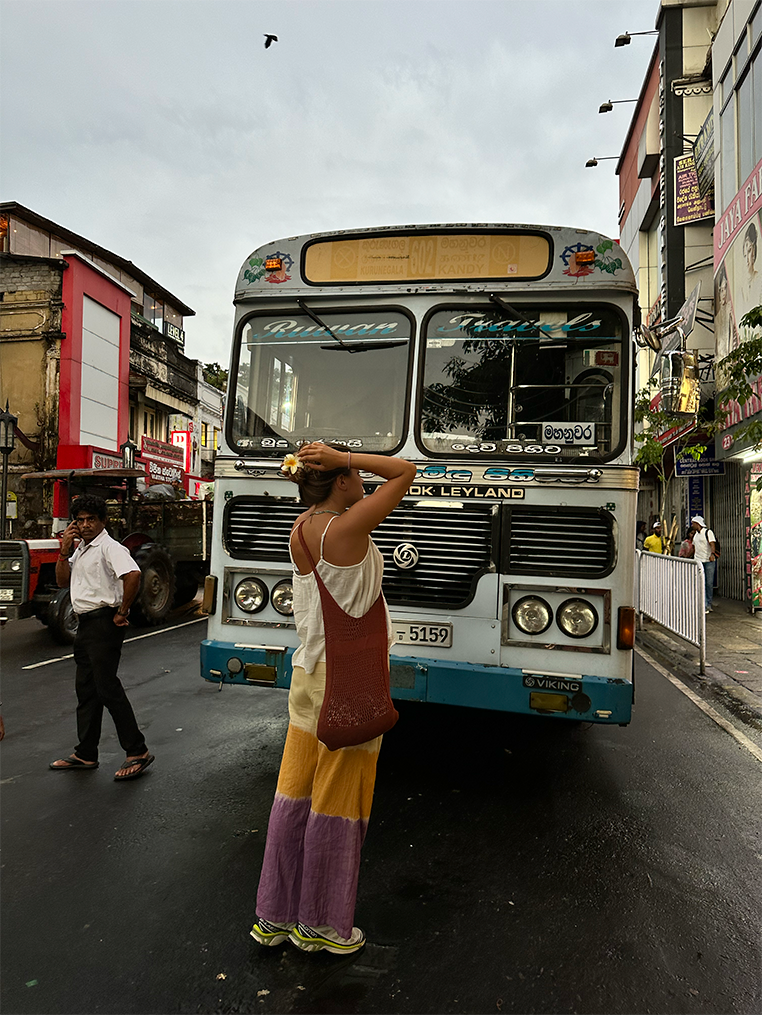
- Buses: they're the cheapest option, though slower and less comfortable with luggage.
Keep in mind that distances are deceiving: Colombo to Kandy is about 3 to 4 hours by road, and almost any trip between areas will take you half a day.
5. Internet and must-have apps
The easiest option is an eSIM, like Airalo, downloading the data straight to your phone before you land (if your phone is compatible). The apps we used most there:
- Google Maps, with our Sri Lanka map saved.
- PickMe and Uber, for getting around.
- Booking.com, for accommodation.
- XE, for converting rupees to euros on the spot.
6. Vaccines and first-aid kit
Coming from Spain, there are no mandatory vaccines to enter Sri Lanka. Some are recommended, like typhoid and hepatitis A, and you should be up to date on the routine ones (tetanus, diphtheria and MMR). The yellow fever vaccine is only mandatory if you're arriving from a country where it's endemic. It's best to book an appointment at an International Vaccination Center a few weeks before your trip.
Your first-aid kit should include mosquito repellent, bite cream, rehydration salts, motion sickness pills and something for an upset stomach.
7. Travel insurance, no question
Private healthcare can get expensive, and on a route with so many journeys, safaris and surfing, it's easy to end up needing a doctor. Before you buy, check the policy carefully and make sure the coverage limits are high enough. We always travel with IATI Seguros.
8. How to dress and behave at temples
Sri Lanka is a mostly Buddhist country and fairly conservative away from the beaches. To enter temples like the Temple of the Tooth in Kandy or the Dambulla caves, you need to cover your shoulders and knees and take off your shoes. Long linen pants and a scarf in your backpack will get you out of any bind.
Respect each place's hours and rules, don't turn your back on Buddha images to take photos, and look after monuments and nature as if they were your own: leave no trace and, if you see trash, pick it up.
9. The food is spicy (and be careful with the water)
Sri Lankan cooking is one of the trip's big surprises: rice and curry, kottu roti, hoppers (appa) and lots of seafood on the coast, with Indian, Dutch and Portuguese influences. Almost everything is spicy and aromatic, so if you're not used to it, ask for it mild.
Always drink bottled or filtered water (bring a reusable bottle) and be careful at some street stalls, especially in Colombo: between how food is stored and the water, it's easy to end up with stomach trouble.
10. Safety: a calm country, with common sense
Sri Lanka is, in general, a safe and very welcoming destination for independent travel. Still, take the usual precautions: keep an eye on your things in crowded places, agree on the tuk-tuk price before getting in if you're not using an app, and be wary of anyone offering resold train tickets or to process your ETA for a fee.
Before you go, check your government's travel advice for Sri Lanka and register your trip if your country offers that service (Spanish citizens can use the Foreign Ministry's Registro de Viajeros). After Cyclone Ditwah, some roads and train lines are still being repaired, so check the status of the routes you plan to take and leave some slack in your itinerary.
And a couple more tips
- Sigiriya: last entry is at 4:30 p.m. and it costs about 35 USD. We recommend climbing in the afternoon, when it's not as hot.
- Colombo: it's a chaotic, very noisy city. We wouldn't spend more than a day there; for your first night, Negombo, near the airport, is calmer.
- Whales in Mirissa: whale-watching season runs from November to April.
Keep planning your Sri Lanka trip
- Sri Lanka travel guide: everything you need to know
- What to see in Sri Lanka: 10 must-see places
- Ella (Sri Lanka): what to see, where to eat and how to get there by train
In our Sri Lanka PDF travel guide you'll find a 10-day itinerary, the cafés, restaurants and hotels we recommend in each area and our favorite plans. And with the Sri Lanka map on Google Maps you'll have all those spots pinned on your phone.