



Sri Lanka has so much to see that the hard part is choosing. We've picked the 10 places we wouldn't miss on a first trip, from the ruins of the Cultural Triangle to the surf beaches of the south, with what we recommend doing at each one and some practical info updated for 2026.
You'll find all these places (and many more) in our Sri Lanka PDF travel guide and pinned on our Sri Lanka Google Maps map.
1. Sigiriya, the Lion Rock
This ancient fortress and palace on top of a huge rock, a UNESCO World Heritage Site, is one of the country's great symbols. The climb is a challenge, but the views from the top are breathtaking, and along the way you'll see its famous frescoes and the gardens at the base.
Our tip: climb in the afternoon, when it's less hot. Watch the hours: last entry is at 16:30 and tickets cost about 35 USD.
2. Kandy and the Temple of the Tooth
Kandy is the cultural heart of Sri Lanka. The Temple of the Sacred Tooth Relic houses one of the most sacred relics in Buddhism and is the city's must-see. Very close by is the Royal Botanical Gardens in Peradeniya, perfect for a peaceful walk among plants, flowers and huge trees.
If you have time, go see a traditional dance show. And for food, our favorite was Balaji Dosai: delicious local food.
3. Dambulla Cave Temple
A complex of Buddhist caves recognized as a UNESCO World Heritage Site, with cave paintings and Buddha statues of great religious and cultural importance. It's close to Sigiriya, so it's easy to combine the two visits.
4. Anuradhapura and Polonnaruwa
The two ancient capitals where Buddhism flourished on the island. Anuradhapura was the capital from the 3rd century BC until the 10th century, and Polonnaruwa between the 10th and 13th centuries; both still have stupas, temples and large water reservoirs. We loved Anuradhapura: it was a really interesting visit that we recommend. It's also home to Jaya Sri Maha Bodhi, the sacred fig tree.
5. Nuwara Eliya and the tea plantations
High in the mountains, Nuwara Eliya is the ideal place to visit a tea plantation and factory, learn how tea is made and stroll among colonial-era gardens and buildings. Plus, its station, Nanu Oya, is currently the starting point for the train to Ella.
6. Ella and the hill country train
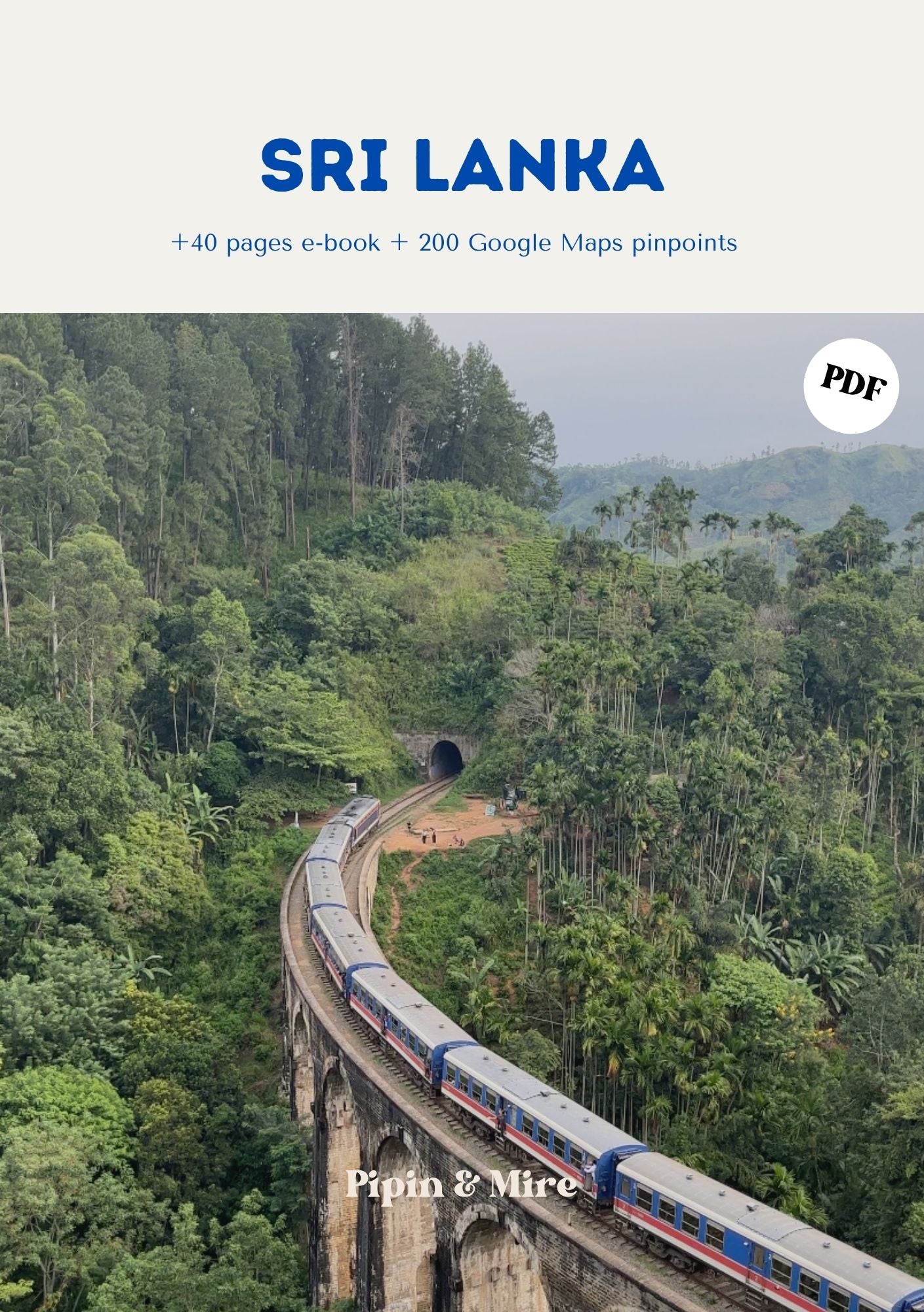
Taking the train through the hill country is one of those experiences that make the trip worth it. As of October 2026, after Cyclone Ditwah, the train leaves from Nanu Oya (the Kandy – Nanu Oya section is still under repair) and takes about 3 hours to Ella. Reserved seats go on sale online 30 days in advance.
Once in Ella, hike up Little Adam's Peak (easy, ideal at sunset) or Ella Rock (tougher, better in the morning). We cover it all, with places to eat and stay, in Ella (Sri Lanka): what to see, where to eat and how to get there by train.
7. Yala National Park
It's one of the best-known national parks in the country, famous above all for its leopards, although you'll also see elephants, crocodiles and lots of birds. To be honest: if you've already done a safari, you can skip it, because it's packed with tourists and the experience ends up feeling impersonal. If you go, the safari starts around 5 a.m. and ends around 11; find a sharp guide and bring water, food, sunscreen, a hat and sunglasses.
8. Galle Fort
Galle is famous for its colonial fort, founded by the Portuguese and expanded by the Dutch. You can walk along the ramparts, enjoy the ocean views and get lost in the shops and cafés of the historic center. It's about 20 minutes by car from Ahangama, so it's an easy day trip if you're staying on the south coast.
9. The south coast: Mirissa, Weligama, Ahangama and Hiriketiya
The perfect area to end your trip. Each town has its own vibe:
- Mirissa: beaches and boat trips to see dolphins and whales, including blue whales, between November and April.
- Weligama: beginner surfing and the stilt fishermen, a practice passed down from generation to generation.
- Ahangama: the base we suggest for the last days of the trip. Beaches for surfers of all levels (Kabalana is one of the best known) and a great selection of cafés and restaurants.
- Hiriketiya: a small surf bay, with spots like Mond.
10. The east coast: Trincomalee and Arugam Bay
When the monsoon brings rain to the southwest (May to September), the east coast is the best option. In Trincomalee you'll find Nilaveli beach, with white sand and crystal-clear water, Fort Frederick and Pigeon Island, a marine national park for snorkeling or diving. Farther south, Arugam Bay is a surfing classic. To be honest, we spent four days there and didn't love it, but it's perfect if you want to surf when it's low season in Ahangama.
If you have more days
- Adam's Peak (Sri Pada): a mountain sacred to several religions. We haven't climbed it yet, but it's what people have recommended to us the most.
- Jaffna: the Tamil north, with its fort, the Nallur Kandaswamy Hindu temple and the Kadurugoda Buddhist temple.
- Knuckles Mountain Range: for camping and hiking, best outside the rainy season.
- Colombo: Pettah market and the National Museum, although we wouldn't spend more than a day there.
How to plan your route
In 10 days you can do the classic route: Negombo, Kandy, Nuwara Eliya, Ella, Yala, Mirissa, Weligama and a few beach days in Ahangama. Sigiriya and Dambulla fit nicely between Negombo and Kandy if you add one more day. We explain it day by day in our Sri Lanka travel guide: everything you need to know, and before you go, don't miss the 10 things you should know before traveling to Sri Lanka (visa, money, transportation and safety).
And so you don't have to look up every place separately, our Sri Lanka PDF travel guide has the itinerary, the cafés, restaurants and hotels in each area and our favorite plans, and with the Sri Lanka Google Maps map you'll have them all on your phone.
We always recommend traveling with travel insurance; we use IATI Seguros.